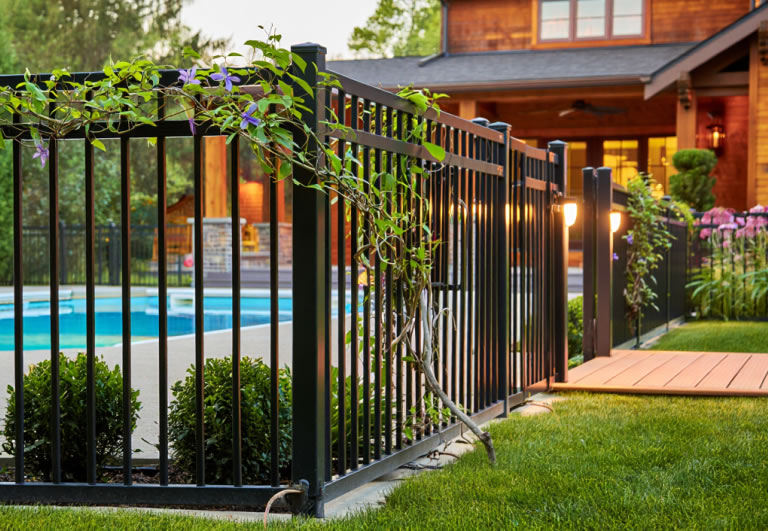
Pool fencing is mandatory for every swimming pool and spa in Australia capable of holding more than 300mm of water – that includes above-ground pools and larger inflatable pools, not just permanent in-ground installations. Drowning remains a leading cause of preventable death in young children, which is why the rules are strict and, in some states, actively enforced through registration and inspection rather than left to homeowners to self-manage.
Key Takeaways
- Every pool or spa holding more than 300mm of water needs a compliant child-resistant barrier, regardless of state.
- The national baseline is Australian Standard AS1926.1, with a minimum barrier height of 1200mm and gates that are self-closing and self-latching.
- States add their own layers on top of the national standard – NSW requires registration on the Swimming Pools Register, Victoria and NSW require periodic compliance certificates, and Queensland has a distinct certificate system tied to property sales.
- Non-compliance can delay or block a property sale or lease, and Victoria carries fines of up to $3,637 for an unmaintained barrier.
- A registered pool is not automatically a compliant one – registration and compliance are assessed separately.
The National Baseline
Most states and territories – Victoria, NSW, South Australia, Tasmania, Western Australia and the ACT – follow Australian Standard AS1926.1-2012. Queensland uses its own modified standard, and the Northern Territory follows an earlier version of the standard. Across all of them, the core requirements are broadly consistent:
- Minimum barrier height of 1200mm, measured from outside ground level.
- A 900mm non-climbable zone around the outside of the fence, clear of anything that could help a child climb over – this includes trees, pot plants, outdoor furniture, and pergolas positioned too close to the barrier.
- Self-closing, self-latching gates that do not open toward the pool, with the latch mechanism high enough (generally at least 1.5m, or shielded) that a small child cannot reach it from outside.
- A CPR resuscitation sign displayed and visible from the pool area in most states.
Where States Diverge
- NSW. Property owners must register pools on the NSW Swimming Pools Register. Before selling or leasing a property, owners must obtain a valid compliance certificate. At the start of a new tenancy, landlords must provide either a valid compliance certificate or an occupation certificate issued within the previous three years.
- Victoria. Requires council registration and compliance certificates renewed every four years. Non-compliance carries fines of up to $3,637, and a faulty or damaged barrier must be repaired immediately, not at the next inspection cycle.
- Queensland. Has some of the strictest enforcement in the country, with a pool safety certificate system that transfers responsibility at the point of sale, and mandatory four-yearly council inspections.
- South Australia and Western Australia. Both include strong local government inspection components alongside the national standard, with registration and periodic checks required.
Common Compliance Failures
Most pool fences do not fail an inspection over the big, obvious things – they fail on small details that are easy to overlook:
-
- A gate that no longer self-closes or self-latches reliably, often due to worn hinges or a hinge spring that has weakened over time.
- Climbable objects placed too close to the barrier – pot plants, outdoor furniture, or garden features moved into the non-climbable zone after the original inspection.
- Gaps in the fence larger than the allowed limit, sometimes caused by ground movement or settling over several years.
- Missing or faded CPR signage.
n
- Overgrown or poorly maintained surrounds pushing plants into the non-climbable zone – a low-maintenance ground cover like artificial grass around the pool area can reduce this specific compliance risk compared with garden beds that need constant trimming back.
- A gate latch positioned or worn low enough that a small child could plausibly reach it.
If You Are Buying, Selling, or Renting a Property With a Pool
Do not assume a registered pool is automatically compliant – registration confirms the pool is on record, not that the barrier currently passes inspection. If you are buying, it is worth checking the compliance position before settlement rather than after, since rectification costs and delays are far easier to negotiate before you own the problem. This is a similar principle to asbestos testing before a renovation – a hidden compliance issue is much cheaper to deal with before you are committed than after.
Frequently Asked Questions
Does an above-ground or inflatable pool need fencing too?
Yes, if it can hold more than 300mm of water. The requirement is based on water depth and capacity, not whether the pool is a permanent in-ground structure.
How often do pool barriers need to be inspected?
This varies by state, but four-yearly compliance certificates are common (Victoria and Queensland, for example). Owners must keep pool barriers compliant at all times, not just when scheduled inspections or certificate renewals are due.
Can a faulty pool gate delay a property sale?
Yes, particularly in NSW and Queensland, where sellers or lessors generally must obtain a valid compliance or safety certificate before completing a sale or entering into a lease. A faulty gate identified late in the process can hold up settlement until it is rectified.
What if I am unsure whether my existing pool fence is compliant?
Engage a licensed pool safety inspector or your local council to assess the barrier against the current standard for your state. Given how often small, easily missed issues cause a failed inspection, a professional check is worth doing well before you need the certificate for a sale, lease, or routine renewal.
This guide is general information current as of 2026. Pool fencing requirements are set by each state and territory and do change – confirm current requirements with your local council or a licensed pool safety inspector before relying on this guide.