Every state and territory requires working smoke alarms in rental properties, and every one of them makes the owner responsible for installing them. That much is settled. What is not consistent, and what catches out investors who own property across borders, is who has to test the alarm once someone is living in the house. In New South Wales the rental provider cannot hand that job to the renter even if both parties want to. In Queensland and the Northern Territory, the renter carries an explicit annual testing duty written into the law.
Key Takeaways
- Installing and maintaining compliant alarms is the owner’s responsibility in every jurisdiction. That part does not vary.
- Testing duties do vary. NSW and Victoria place a mandatory annual check on the owner, Queensland and the Northern Territory place a 12-monthly testing duty on the renter, and the remaining jurisdictions use a general maintenance obligation rather than a fixed interval.
- In NSW, a landlord cannot delegate responsibility for working smoke alarms to a tenant through the tenancy agreement.
- Queensland requires interconnected photoelectric alarms in all rentals already, and every remaining Queensland dwelling must comply by 1 January 2027.
- A faulty smoke alarm is treated as an urgent repair in most jurisdictions, which compresses your response time from weeks to days or less.
What Is Consistent Nationally
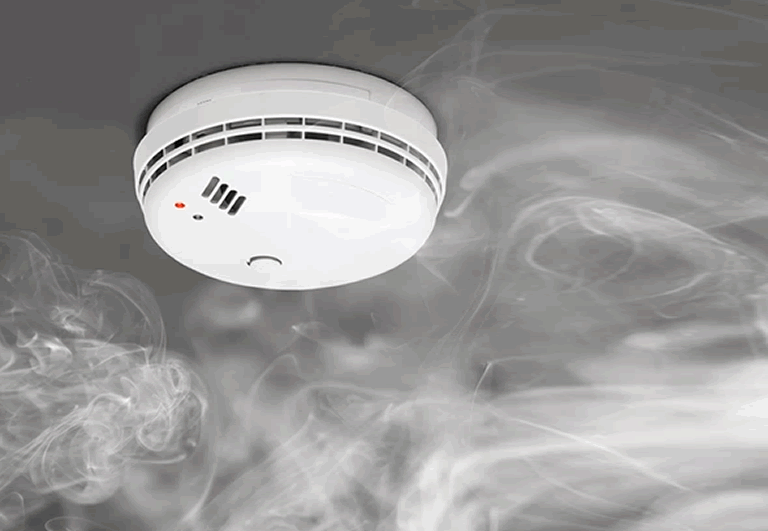
Smoke alarms must comply with Australian Standard AS 3786 across the country, and they are required in all buildings where people sleep. Alarms have a service life of ten years from the date of manufacture, not from the date of installation, and must be replaced at that point even if they still respond to a test.
The manufacture date is printed on the back or side of the unit. This is the single most commonly missed obligation, because an alarm that beeps when you press the button feels compliant, and nothing about it signals that it expired eighteen months ago.
Beyond that, the detail diverges sharply.
Who Has to Test the Alarm: The Real Difference
Most guidance on this topic is written by alarm retailers and answers the question for homeowners. The landlord and renter split is where rental properties actually differ, and it is the part that determines who is liable when something goes wrong.
New South Wales
Landlords and agents must ensure smoke alarms, including heat alarms, are working. Critically, a landlord cannot delegate responsibility for working smoke alarms to a tenant in a residential tenancy agreement. A clause attempting to do so has no effect.
Alarms must be checked annually. Where an alarm is not in working order, the landlord or agent must ensure it is repaired, which includes replacing a battery, within two business days. Alarms must be replaced within ten years of manufacture, and batteries installed or replaced every year, or for lithium batteries within the period specified by the manufacturer.
An alarm counts as not working if it has been removed and not replaced, does not function because the battery is flat, or is malfunctioning through accumulated dust, insects or corrosion.
Tenants must notify the landlord or agent if they find an alarm is not working. In the specific circumstances where a tenant is permitted to change a battery or engage a licensed electrician, they must notify the landlord within 24 hours of the work being completed, and the landlord should reimburse their costs within seven days of written notice with receipts. These rules do not apply to social housing tenancies.
Full detail on the NSW regime, including the seven minimum standards and the statutory urgent repairs list, is in our NSW landlord obligations guide. In strata properties, the tenancy agreement determines whether the owners corporation, landlord or agent arranges repairs to hard-wired alarms. Confirming this with strata management does not remove the lot owner’s own obligation for alarms inside the unit.
Victoria
Victoria closed a significant gap in November 2025. Under the earlier reforms, the annual smoke alarm check applied only to rental agreements commencing on or after 29 March 2021, which meant long-running periodic agreements were never captured. That gap was identified after a coronial matter arising from a fatal fire in a Ballarat rental, and the law was changed in response.
Since November 2025 it is mandatory for rental providers to ensure smoke alarms in every residential rental property are tested at least once every 12 months, regardless of when the rental agreement started. If you have a renter who has been in place since 2018, the annual check now applies to that property.
The hardware requirement depends on when the property was built or significantly renovated. Alarms meeting AS 3786 have been compulsory in all Victorian homes, units, flats and townhouses since 1 August 1997. Properties built or significantly renovated after that date require alarms hardwired to 240v mains power with a backup battery. From 1 May 2014, properties requiring more than one alarm must have them interconnected so that all sound together. Older properties may still lawfully use alarms powered by a 9V removable battery, but that battery needs replacing annually.
A faulty or untested alarm is an urgent repair. If an alarm is not installed, not working correctly, or has not been tested in more than 12 months, the renter can request urgent repairs and the rental provider must arrange them immediately. This sits alongside the broader Victorian rental minimum standards, which are a separate obligation again.
Queensland
Queensland has the most prescriptive hardware regime in the country and the most unusual division of duties.
All rental properties classed as a domestic dwelling must already have interconnected photoelectric smoke alarms complying with AS 3786-2014. They must be installed in every bedroom, in hallways connecting bedrooms, and on every storey. Where a storey has no bedroom, an alarm must go in the most likely path of travel to exit the dwelling. Alarms must be hardwired or powered by a non-removable 10-year battery. Interconnection can be hardwired or wireless, provided every alarm sounds when one is triggered.
The lessor must test and clean each smoke alarm within 30 days before the start of a tenancy, including a renewal. Then the duty shifts. During the tenancy, the tenant must test and clean each smoke alarm at least once every 12 months. The tenant must also notify the lessor of a non-working alarm and must not remove an alarm or its battery, or otherwise reduce its effectiveness.
This is a genuine reversal of the NSW position, and it is the detail most likely to trip up an investor who owns in both states. Full detail is in our Queensland landlord obligations guide.
Northern Territory
Approved alarms must be installed in all residential premises and movable dwellings, including caravans. An approved alarm is a photoelectric type that is either hardwired to the power supply or has a sealed 10-year lithium battery.
Like Queensland, the Northern Territory places a testing duty on the occupant. Tenants are required to test each smoke alarm at least once every 12 months and advise the owner or agent if an alarm does not work.
Tasmania
Owners of tenanted premises must ensure alarms are installed and maintained in accordance with the Regulations. Tasmania is stricter than most on hardware: every alarm in rental premises must be either permanently connected to the power supply of the premises or powered by a 10-year non-replaceable battery. Alarms with replaceable batteries do not comply in a rental, even though they may be lawful in an owner-occupied home.
In class 1a house buildings, alarms are required on every storey, and on storeys containing a bedroom they must be located in every corridor or hallway serving those bedrooms. The Residential Tenancy Commissioner can issue an order requiring an owner to comply.
Western Australia
Under the Building Regulations, alarms must be installed and in working order before a tenancy agreement starts. WA generally requires mains-powered alarms, other than where a 10-year tamper-proof lithium battery unit is approved, and alarms must be no more than ten years old.
South Australia
All South Australian homes must have a working smoke alarm, and landlords are responsible for ensuring alarms are correctly installed and working. The specific requirement depends on the age of the home and when it was built or purchased, which makes SA one of the harder jurisdictions to assess from a general guide. Check the position for your particular property rather than assuming.
Australian Capital Territory
Under the Residential Tenancies Act, alarms must be installed and maintained in properties where people sleep, and the landlord is responsible for installation, testing and maintenance. Alarms must comply with AS 3786. In multi-level homes, alarms are required on each level and must be interconnected. Alarms must be replaced at ten years even if still functioning.
The Queensland 2027 Deadline
Queensland’s rental sector has been compliant since 1 January 2022, but the wider deadline is now close. From 1 January 2027, all existing private homes, townhouses, units and manufactured homes in Queensland must have interconnected photoelectric smoke alarms. Registered caravans and motorhomes are also captured.
This matters for two groups beyond current landlords. If you own an owner-occupied Queensland property you intend to sell or rent in the next couple of years, the work is coming regardless and demand for licensed installers will tighten as the date approaches. And if you are buying in Queensland, a non-compliant smoke alarm system is a rectification cost that is far easier to negotiate before settlement than after.
When an Alarm Fails During a Tenancy
In most jurisdictions a non-working smoke alarm is an urgent repair rather than a routine one. That changes the timeline substantially.
In NSW you have two business days to repair a reported fault. In Victoria the rental provider must arrange the repair immediately once notified. Treating a reported alarm fault as something to bundle into the next scheduled maintenance visit is the single clearest way to end up on the wrong side of a tribunal finding.
There is also an insurance dimension. Where smoke alarm obligations are breached and a fire occurs, insurers may reduce or decline the claim. The cost of an annual check is trivial against that exposure.
Record Keeping That Actually Helps
No jurisdiction issues a universal smoke alarm compliance certificate, and in Queensland the certificates issued by maintenance companies are a commercial product rather than a legal requirement. What protects you is your own record.
For each alarm, record its location, its type, its manufacture date, the date it was last tested, and its working condition. Capture that in the entry condition report with photographs, update it at each routine inspection, and keep the invoices from any repair or replacement. If a dispute arises, a dated record beats a recollection every time.
The same logic applies to other safety obligations that run on their own cycles. Pool barrier compliance is a separate regime with its own certificates and its own state-by-state divergence, and a lapse there can hold up a lease independently.
Frequently Asked Questions
Can I put a clause in the lease making the tenant responsible for the smoke alarm?
In NSW, no. A landlord cannot delegate responsibility for working smoke alarms to a tenant through the tenancy agreement, and a clause attempting it is ineffective. Elsewhere, the statutory duties apply regardless of what the agreement says. Where a renter does have a testing duty, as in Queensland and the Northern Territory, that duty comes from the legislation rather than from anything you write into the lease.
My alarm still beeps when I test it. Do I really need to replace it at ten years?
Yes. The ten-year limit runs from the manufacture date printed on the unit, and it applies regardless of whether the alarm currently responds. Sensor sensitivity degrades in ways a button test does not detect, because the test button confirms the sounder and the power supply, not the sensing chamber.
Do these rules apply to social housing?
The NSW smoke alarm maintenance rules for landlords and tenants do not apply to social housing tenancies, which operate under separate arrangements. Check the position with the relevant housing authority rather than applying the private rental rules.
What about apartments and strata properties?
Alarms inside the lot are generally the lot owner’s responsibility, while common area alarms and fire safety statements sit with the owners corporation. An annual strata fire safety inspection does not usually cover battery changes or alarm expiry dates inside individual units, so do not treat it as discharging your obligation as a landlord.
Are interconnected alarms required everywhere?
No. Queensland requires them in all rentals now. Victoria requires smoke alarms in properties built or significantly renovated after 1 May 2014, with interconnected alarms required where more than one alarm is needed. The ACT requires them in multi-level homes. Elsewhere the position varies, and interconnection is often recommended by fire services rather than mandated.
Who pays if the tenant replaces a battery?
Where a tenant is permitted to do the work and does so, the landlord reimburses them. In NSW this should occur within seven days of written notice accompanied by receipts. Compliance costs are the owner’s, not the renter’s.
This guide is general information current as of 2026 and is not legal advice. Smoke alarm requirements for rental properties are set separately by each state and territory and change regularly. And the requirements for South Australia and Western Australia in particular depend on the age and history of the property. Confirm the current position with your state or territory tenancy regulator or fire service before relying on this guide.
For the wider compliance picture across all four obligation types, see our guide to landlord obligations across Australia.