Victoria’s rental minimum standards are not a best-practice guide or an aspirational target. They are a legal floor, and the property has to clear that floor before it is advertised, not before the renter collects the keys. That shift moved the compliance deadline several weeks earlier in the leasing cycle and turned a lot of “we will sort it before move-in” jobs into a reason a listing cannot legally go up at all.
Key Takeaways
- There are 15 categories of minimum standards, and a rental property must meet all of them at the time it is advertised or offered to let, as well as before the renter moves in.
- The standards are separate from the gas and electrical safety checks, which run on a two-yearly cycle for agreements entered into after 29 March 2021.
- Corded internal window coverings have needed a fitted anchor since 1 December 2025 to stop cords forming loops.
- If a property drops below a minimum standard during a tenancy, that is treated as an urgent repair, and the renter can arrange the work themselves up to $2,500 if the rental provider cannot be reached.
- Victoria uses “rental provider”, “renter” and “rental agreement” in place of landlord, tenant and lease. The old terms have no legal standing at VCAT.
The Compliance Checkpoint Moved Earlier
Under the older arrangement, the obligation existed but enforcement was largely reactive. A property needed to meet the standards at the start of a tenancy, and problems were usually raised after someone had already moved in and noticed something was wrong.
The checkpoint now sits at the advertising stage. A rental provider or their agent must ensure the property meets the prescribed minimum standards before it is listed. In practice that means the inspection, the quotes and the rectification work all need to happen before the photos go up, not in the gap between application and move-in.
The practical consequence is about evidence. There is no single government-issued “minimum standards certificate” that proves compliance, so the burden falls on your own records. A dated condition report with photographs, completed before the property is listed, is the strongest documentation most rental providers will realistically have. Keep the invoices for any rectification work with it.
The 15 Minimum Standards in Full
Each standard below is the requirement as it stands, followed by what actually tends to fail in older Victorian housing stock.
1. Bathroom
The bathroom must have a washbasin, a shower or a bath, and a supply of hot and cold water. Shower heads must carry a 3-star water efficiency rating. Where a 3-star head cannot be installed, generally because of the age or plumbing of the property, a 1-star or 2-star head is accepted.
Common failure: a compliant shower head was fitted years ago and later swapped out during a repair for whatever the plumber had on the van.
2. Electrical safety
The property must have a modern switchboard fitted with circuit breakers and electrical safety switches. This has to be verified by an electrician rather than assessed visually by the rental provider or agent.
Common failure: older properties with a partial upgrade, where the switchboard was modernised but one circuit, often an old lighting or outdoor circuit, was never brought across.
3. Heating
There must be a fixed heater in the main living area, in good working order. For rental agreements from March 2023 onward, that heater must be energy efficient, and an existing heater that is not energy efficient has to be upgraded.
Common failure: a portable plug-in heater left in the lounge room. Portable units do not satisfy the standard because the requirement is specifically for a fixed heater. If you are replacing one, a ducted heating system is one of several fixed options that can meet the requirement.
4. Kitchen
The kitchen needs a dedicated cooking and food preparation area, a sink in good working order connected to a reasonable supply of hot and cold water, and a stovetop in good working order with two or more burners. If an oven is present, it must also work.
Common failure: a dead burner on a four-burner cooktop that has been ignored for a year, or an oven left in place that no longer heats and was quietly written off as “not included”.
5. Laundry
If the property has a laundry, it must be connected to a reasonable supply of hot and cold water. Note the conditional wording. The standard does not require you to install a laundry where none exists.
6. Lighting
Interior rooms, corridors and hallways must have access to working lights. The property must have natural light during the day, which can include light borrowed from adjoining rooms, and access to artificial light at night.
Common failure: an internal hallway or a converted room with no working fixture, where the previous renter used a floor lamp.
7. Locks
External entry doors, other than screen doors, must have functional deadlocks, or locks that can be unlocked with a key from the outside. The door must also open without a key from the inside.
Common failure: double-cylinder deadlocks that need a key on the inside as well. These fail the standard and are a genuine fire-egress risk.
8. Mould and damp
All rooms must be free from mould and damp caused by or related to the building structure.
Common failure: treating the symptom. Painting over a patch does not address structural damp, and it will resurface. Where the cause is not obvious, professional mould testing will identify whether the source is structural or a ventilation and condensation issue, which changes who is responsible for fixing it.
9. Structural soundness
The property must be structurally sound and weatherproof.
10. Toilets
The toilet must be in good working order and connected to a sewerage or septic system. It must be in a separate room, either on its own or in an appropriate room such as a bathroom or a combined bathroom and laundry.
11. Ventilation
All rooms must have adequate ventilation, and this explicitly includes the bathroom, shower, toilet and laundry.
Common failure: a bathroom exhaust fan that spins but vents into the roof cavity rather than outside, or one that has been painted over during a repaint.
12. Vermin-proof bins
The rental provider must supply rubbish and recycling bins. They must be vermin-proof and meet council collection standards.
13. Windows
All external windows that can be opened must have latches that secure them against entry from outside.
Common failure: painted-shut or seized latches on older timber sashes, and casement windows where the winder mechanism no longer draws the sash tight enough for the latch to engage.
14. Window coverings
Rooms used for living or sleeping must have curtains or blinds. They must open and close, block light and maintain privacy.
15. Window covering anchors
Since 1 December 2025, all corded internal window coverings must have an anchor installed to secure the cords and prevent them forming loops. This is a child-strangulation control, and it applies to existing blinds and curtains, not only newly installed ones.
Common failure: assuming it only applies to new installations. Consumer Affairs Victoria supplies free curtain and blind cord safety kits, and hardware stores sell them.
The Safety Checks That Sit Alongside the Standards
The minimum standards are a separate obligation from the periodic safety checks. Meeting one does not discharge the other.
Gas safety checks
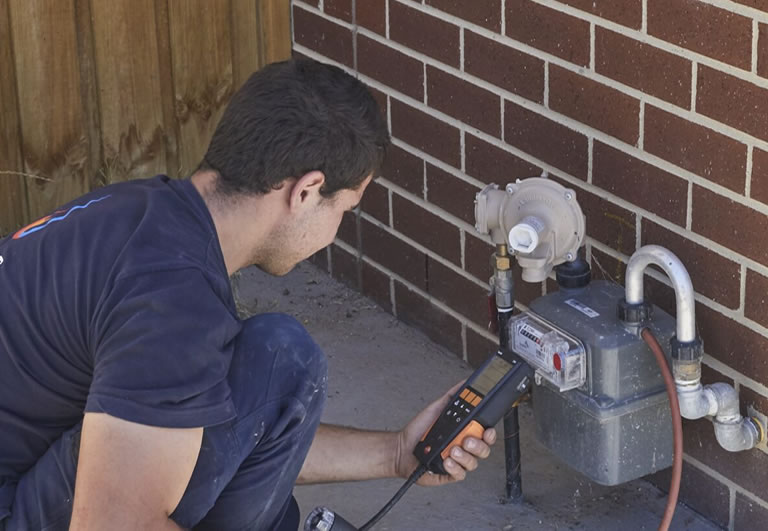
Rental providers who entered into a new agreement after 29 March 2021 must have gas safety checks conducted every two years by a licensed or registered gasfitter. The gasfitter must be endorsed in the specialised class of Type A Gas Appliances Servicing, which is shown on their Plumbers Identity Card. A general plumbing licence is not sufficient.
If no check has been done in the previous two years when a renter takes occupancy, one must be completed as soon as possible. Before entering into an agreement, the rental provider must disclose the date of the last gas safety check and any outstanding recommendations from it.
Electrical safety checks
The same trigger applies. Agreements entered into after 29 March 2021 require all electrical installations and fittings to be checked by a licensed electrician at least every two years, and the date of the last check plus any outstanding recommendations must be disclosed before the agreement is signed.
Separately, since 29 March 2023, all power outlets and lighting circuits must connect to a switchboard-type circuit breaker. They must also connect to a switchboard-type residual current device. This requirement can catch properties with partially upgraded switchboards. A recent-looking switchboard does not necessarily mean the property complies. It is therefore worth confirming compliance explicitly.
Record keeping
For both gas and electrical, the rental provider must keep a record of the most recent check until the next one is created. If a renter requests a copy in writing, it must be provided within seven days. Storing these somewhere you can retrieve them quickly is not a formality, because the seven-day clock is short if the paperwork lives in a filing cabinet you rarely open.
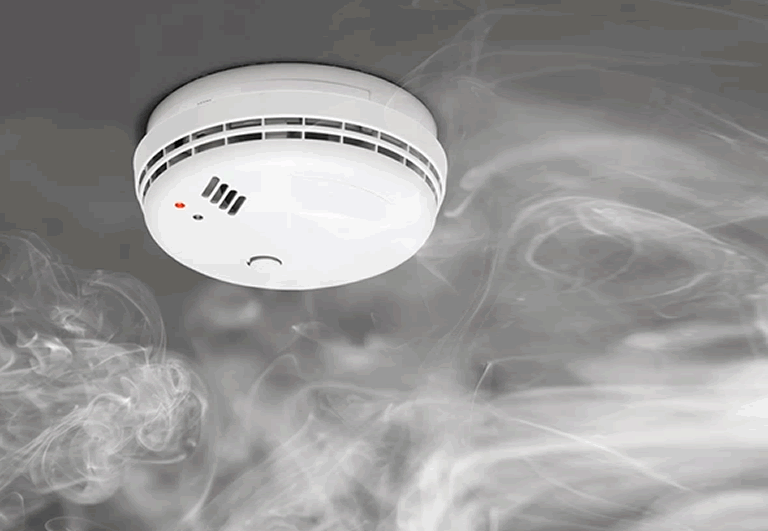
Smoke alarm obligations run on their own separate cycle and are not part of the 15 minimum standards. Since November 2025, rental providers must ensure alarms in every Victorian rental are tested at least once every 12 months, regardless of when the agreement started. The rules differ considerably between jurisdictions, so if you own property interstate see smoke alarm rules for rental properties in every state.
When a Property Falls Below Standard During a Tenancy
The standards apply throughout the agreement, not only at the start. If a property drops below one of them mid-tenancy, that is treated as an urgent repair.
Urgent repairs are defined in the Residential Tenancies Act 1997. They include a gas leak or dangerous electrical fault. They also include the failure or breakdown of a supplied appliance for hot water, water, cooking, heating or laundry, or the gas, electricity or water supply.
The part that catches rental providers out is what happens next. If the renter notifies you and you cannot be contacted, or you do not respond immediately, the renter can arrange and pay for an urgent repair of up to $2,500 themselves. You must then repay them within seven days of receiving a written request. You do not get to choose the tradesperson, negotiate the quote, or dispute the necessity after the fact.
This is the strongest practical argument for having a named after-hours contact who actually answers. The cost difference between a repair you arrange and one arranged at short notice by someone with no reason to shop around is usually larger than the inconvenience of being reachable.
A Pre-Advertising Checklist
Work through this before the listing goes live rather than after an application comes in.
- Book the electrical safety check and confirm the electrician verifies circuit breakers and residual current devices on every power and lighting circuit, not just the main board.
- Book the gas safety check if the property has any gas appliance, fixture or fitting, and confirm the gasfitter holds the Type A servicing endorsement.
- Walk every room and test each light fitting, window latch, external door lock and exhaust fan individually.
- Confirm the main living area heater is fixed, works, and meets the energy efficiency requirement if your agreement dates from March 2023 or later.
- Check every cooktop burner and the oven.
- Check that corded blinds and curtains have anchors fitted.
- Inspect for mould and damp in wet areas, behind furniture and in any room with poor airflow. A thorough clean between tenancies often exposes issues that a walkthrough with furniture in place will hide.
- Complete a dated condition report with photographs covering each of the 15 categories, and file it with your safety check records and rectification invoices.
If the property has a pool or spa, that sits under a separate regime again. Pool barrier compliance has its own registration and certificate requirements, and a non-compliant barrier can hold up a lease independently of the minimum standards.
Frequently Asked Questions
Do the minimum standards apply to a tenancy that started years ago?
The standards apply to rental agreements from 29 March 2021 onward. If a renter moved in on or after that date, the standards apply to their tenancy. If a property falls below a required standard during the tenancy, the renter can request urgent repairs. This applies regardless of how long they have lived there.
Are heritage-listed properties exempt?
There are some exceptions for heritage-listed properties, but they are narrow and specific rather than a blanket exemption. If you own a heritage property, confirm with Consumer Affairs Victoria which specific standards are affected. Do not assume the heritage listing generally excuses non-compliance.
Is a 3-star shower head always mandatory?
No. A 3-star water efficiency rating is the requirement, but where one cannot be installed, for example because of the age or plumbing configuration of the property, a 1-star or 2-star head is accepted. The exception is about genuine installation constraints, not preference or cost.
Can I pass compliance costs on to the renter?
No. Meeting the minimum standards and arranging the gas and electrical safety checks are the rental provider’s obligations and the rental provider’s cost. These are ordinary holding costs of an investment property rather than something recoverable from the renter.
What if a renter reports a problem I disagree is a breach?
Respond in writing and promptly either way. If the matter is genuinely disputed, it can be taken to Consumer Affairs Victoria or VCAT. However, an unanswered request is far harder to defend than a documented disagreement. Saying “I did not think it applied” is not a position that holds up well when the standards are published in plain language.
Do I need a certificate proving the property meets minimum standards?
There is no single government-issued minimum standards certificate. Compliance is demonstrated through your own records, which is why the dated condition report. The safety check documentation and the rectification invoices matter more than they might appear to.
This guide is general information current as of 2026 and is not legal advice. Victoria’s rental laws are set out in the Residential Tenancies Act 1997 and the Residential Tenancies Regulations 2021, and they do change. Confirm current requirements with Consumer Affairs Victoria, or seek advice specific to your property, before relying on this guide.
For how Victoria compares with the other states and territories, see our overview of landlord obligations across Australia.
If you also hold property in New South Wales. Note that the obligations differ substantially: see our NSW landlord obligations guide.