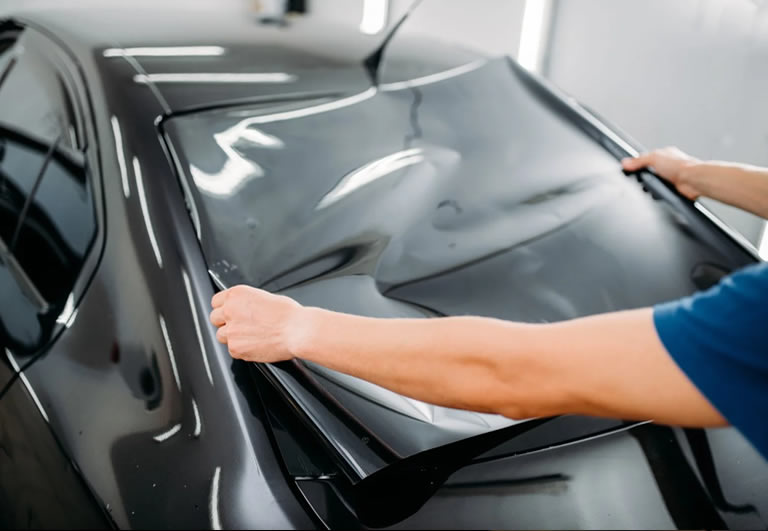
Getting your car windows tinted is one of the most common vehicle modifications in Australia – it cuts glare, blocks UV, and keeps the cabin cooler in summer. But unlike most car mods, tint darkness is regulated, and the rules are set state by state rather than nationally. What is legal in Queensland is not automatically legal in Victoria, and driving interstate with tint that does not comply can mean a fine or a defect notice even if the film was fitted legally where you live.
Here is what the rules actually say in each state. How they are enforced, and how to make sure your car stays compliant before you book a tint job.
Key Takeaways
- Tint darkness is measured in VLT (Visible Light Transmission) – the percentage of light that passes through the combined glass and film.
- Most states allow a minimum of 35% VLT on front side windows and 20% VLT on rear windows, but Victoria and Western Australia have stricter windscreen rules.
- Tint laws follow the state your car is registered in, not where the tint was fitted – this catches out a lot of people who move interstate or buy a used car.
- Illegal tint typically results in a fine plus a defect notice, and can complicate an insurance claim after an accident.
What VLT Actually Means
Every state measures legal tint darkness using VLT, or Visible Light Transmission – the percentage of light that passes through the combined glass and film. A window with 35% VLT lets 35% of light through and blocks the rest. The lower the number, the darker the tint. This matters because your factory glass already has some tint built in, usually letting through 70–80% of light, so an installer needs to measure your actual glass before adding film to make sure the combined result still passes.
State-by-State Tint Limits
Most Australian states and territories land on similar numbers, though there are a few important exceptions:
- NSW, QLD, SA and ACT: Front side windows must allow at least 35% VLT. Rear side windows and the rear windscreen must allow at least 20% VLT. A strip across the top 10% of the front windscreen can be tinted.
- Victoria: Front side windows must allow at least 35% VLT, in line with other states. The front windscreen is more tightly controlled – only a 10% strip (or 65mm, whichever is smaller) at the top can be tinted, and aftermarket film cannot be applied to the main windscreen area at all.
- Western Australia: Front side windows must allow at least 35% VLT and rear windows at least 20%, but WA does not permit any aftermarket tint on the windscreen – not even the top strip that other states allow.
- Northern Territory and Tasmania: Broadly follow the same 35% front / 20% rear structure as NSW and QLD, though it is worth confirming current local guidance since the fine print can shift.
In every state, if the rear windows or rear windscreen are tinted below the legal front-window limit. The car generally needs dual external side mirrors fitted so the driver still has a clear view behind the vehicle.
How to Check Your Tint Is Legal
You do not need to guess. A few practical steps before or after a tint job:
- Ask for a VLT reading, not just a film percentage. A “35% film” combined with factory-tinted glass can easily test under the legal limit. A reputable installer will measure the combined result with a calibrated VLT meter, not just the film alone.
- Get it in writing. Ask the installer for a compliance certificate or receipt stating the VLT reading achieved on each window.
- Check again if you buy a used car or move states. Tint that was legal for the previous owner, or in your old state, is not automatically legal for you.
What Happens If Your Tint Is Illegal
Enforcement varies by state, but the pattern is similar across the country. Being pulled over with non-compliant tint typically results in an infringement fine, plus a defect notice requiring the film to be removed or replaced and the car re-inspected before it can legally be driven again. In more serious cases, a major defect notice can take the car off the road entirely until it passes inspection. There is also a less obvious risk: if a car does not meet the road-safety standard for its state and is involved in an accident, it can complicate an insurance claim.
Moving Interstate or Buying a Used Car
Tint laws apply to where the car is registered, not where the tint was fitted. If you move interstate, or buy a second-hand car that was tinted elsewhere. It is worth having the tint checked against your new state’s rules rather than assuming it complies. A tint installer with a calibrated VLT meter can usually test the existing film in a few minutes, before it becomes a problem at a roadworthy inspection.
Frequently Asked Questions
Can I use the same tint darkness in every state?
Mostly, but not entirely. The 35% front / 20% rear rule is close to universal, but Victoria and Western Australia restrict windscreen tinting more heavily than NSW, QLD, SA and ACT. If you regularly drive across state lines, tint to the strictest state you will be driving in.
Does factory-tinted glass count toward the legal limit?
Yes. The law measures the combined VLT of the glass and any film applied to it, not the film in isolation. Cars with darker factory privacy glass have less room to add aftermarket film before going under the limit.
Are there medical exemptions for darker tint?
Some states allow medical exemptions for conditions that require additional protection from light, assessed case by case through the relevant state transport authority.
How dark can I legally go?
This depends on your car’s factory glass as much as the film itself. A professional installer can measure your specific windows and tell you the darkest film that keeps you compliant. Rather than relying on a generic percentage.
This guide is general information only and current as of 2026. Tint regulations are set and enforced by each state and territory and can change – always confirm current requirements with your state or territory transport authority. Or a licensed tint installer, before booking a job.